

















HD66 TAP
NFC Wallet QR Payment Soundbox
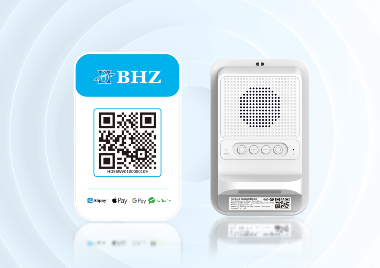
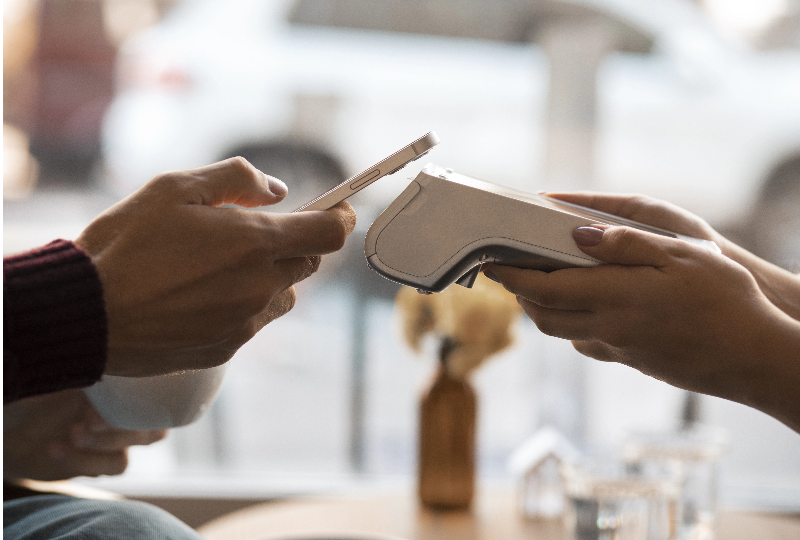
QR and NFC wallet interaction at one payment point. HD66 Tap combines a dedicated top NFC area, customer-facing QR presentation and audible payment notifications.

QR and NFC Wallet Options
Support QR payment and compatible NFC wallet services through your enabled payment integration.
A Dedicated Tap Area
The top-mounted NFC area has a 72 mm coil diameter and a 15-degree surface angle, providing a defined point for customer interaction.
Clear Audible Notifications
A 3W speaker rated at 105 dB at 10 cm delivers payment alerts for busy merchant environments.
Flexible Network Deployment
4G Cat1 and 2.4 GHz Wi-Fi provide network options for different merchant locations.
Rechargeable Countertop Design
A 2000 mAh battery and USB Type-C connection support everyday counter use.
Technical Specifications
| Processor | ASR1605 |
|---|---|
| CPU | 614 MHz ARM Cortex-R5 |
| Operating system | 32-bit RTOS |
| Memory | 8 MB RAM + 8 MB Flash |
| Payment interaction | QR payment and NFC wallet interaction, subject to service integration |
| Mobile connectivity | 4G Cat1, LTE-TDD/FDD |
| Wi-Fi | 2.4 GHz |
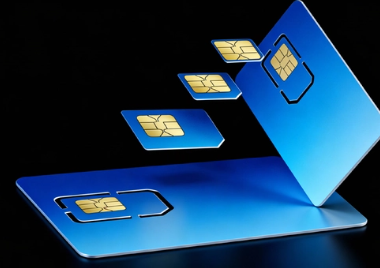
| SIM configuration | Soldered SIM or pluggable SIM |
| Display | Optional 8-digit segment display |
| Display information | Signal strength, battery level, volume, clock, payment amount and transaction records |
| Battery | 3.7V, 2000 mAh |
| Controls | Power, Volume+, Volume-, Function and Reset |
| Speaker | 3W, 5 ohms; 105 dB at 10 cm, 80 dB at 80 cm |
| Interface | 1 USB Type-C |
| Power input | 5V/1A |
| Indicators | Blue and green status indicators; red battery-charging indicator |
| NFC coil diameter | 72 mm, on top of the device |
| NFC interaction-surface angle | 15 degrees from horizontal |
| QR display plate | 80 x 100 mm |
| Overall dimensions | 94 x 109 x 147.5 mm |
| Operating temperature | -10 to 50 degrees C |
| Storage temperature | -20 to 60 degrees C |
| Relative humidity | 10%-95%, non-condensing |
| Certification | CQC |
Frequently Asked Questions
Soundbox
What is a payment soundbox?
A payment soundbox announces payment information received from an integrated payment service. It helps merchants hear incoming payment notifications while serving customers. Depending on the model, it can also display amounts, support NFC wallet interaction or print receipts.
How does a payment become a voice notification?
After a successful payment, your payment platform sends a notification request to the BHZ platform. The BHZ platform then issues the broadcast command to the associated soundbox. Your payment provider continues to handle payment processing and settlement.
Can the devices use our brand and language?
Branding and voice-language customization can be included in the project scope. Available options depend on the device model, firmware and supported voice package.
Can we connect our existing payment platform?
Your payment platform can send notification requests to the BHZ platform for device broadcast through an agreed integration. Supported interfaces and payment services are confirmed during project planning; specific gateways are not pre-integrated by default.
Can we buy devices separately from the platform and SIM service?
Projects can cover hardware only, hardware with platform support, hardware with connectivity, or a combined package. Integration and ongoing service responsibilities are agreed for the deployment.
How do we start a pilot?
Share your target market, merchant scenarios, payment platform and connectivity requirements. Together, we define the device mix, integration scope and measures for notification delivery, connectivity and operational effort.
Platform
What does the BHZ platform manage?
The soundbox platform manages device inventory, merchant binding, broadcasts, firmware and voice-package updates, operational records and charts. Your payment system remains responsible for processing and settlement; broadcast records are not a settlement ledger.
Can we manage regional teams and merchant groups?
Yes, through hierarchical organizations and predefined roles with scoped access. The current portal supports multi-level operations within a deployment, but not separate-customer multi-tenancy or custom roles.
Can we onboard and assign devices in bulk?
Yes, device-batch registration, bulk import and bulk merchant binding are supported. Each device belongs to one merchant at a time and can be reassigned within its organization.
Can we onboard and assign devices in bulk?
Yes, with immediate or scheduled firmware updates, targeted deployment, a testing stage and status records; voice packages are managed separately. Automatic rollback is not available, and failed upgrades leave devices on their current version.
Can we send promotional audio and track delivery?
Administrators can target broadcasts by device, batch or merchant and review results, using scheduled, startup or payment-related strategies. Merchant accounts cannot create this content, and the portal has no built-in content-approval workflow.
Can a merchant have multiple devices, and can devices be reassigned?
The portal supports binding multiple devices to a merchant. Each device is assigned to one merchant at a time. A device can be unbound and reassigned to another merchant within its organization. Operating locations, such as stores or booths, can also be associated with devices.
Does the platform replace our payment gateway or settlement system?
No. The soundbox portal manages devices and notification delivery. Your payment platform processes the payment and sends the notification request. Broadcast records support operational checks; they are not a settlement ledger or an independent confirmation of funds received.
SIM and Soldered SIM
Can BHZ supply SIM connectivity or work with our operator?
BHZ can assess a device-and-SIM package or compatibility with your existing operator. SIM supply, activation, network settings, data service and support are defined for the target market and project.
What SIM fees and data allowances apply?
Pricing, allowances, renewals, top-ups, roaming and cancellation terms depend on the agreed connectivity service. Data requirements should account for payment notifications, firmware updates and voice-content downloads. These are assessed during project planning and pilot testing.
Should we choose a removable SIM or a soldered SIM?
A removable SIM allows local card replacement; a soldered MFF2 SIM reduces physical SIM handling in the field. Availability depends on the selected hardware and servicing requirements.
Can we use our existing mobile operator or SIM supplier?
Existing connectivity can be assessed as part of the deployment. Compatibility depends on device frequency bands, SIM configuration, network access settings and service terms. Share the target countries, operator details and required device models with BHZ for evaluation.
How are activation and data allowances planned?
Agree activation and billing with the SIM provider, then use pilot measurements to size the allowance. Include payment notifications, routine device communication, firmware updates and voice downloads.
Can we monitor SIM usage and connectivity across a fleet?
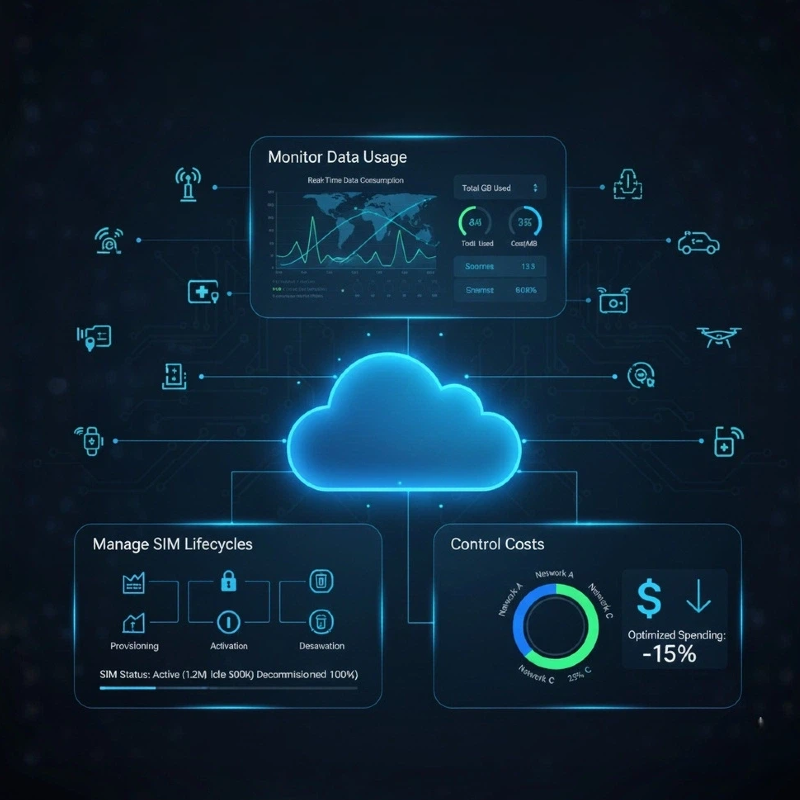
Yes. BHZ’s connectivity solution can be scoped to include SIM information, data-usage analysis, reports and service alerts through the applicable connectivity-management service and integrations. Available data and controls depend on the operator and project. These capabilities are separate from the soundbox portal’s device and broadcast functions.
Can BHZ support an eSIM deployment?
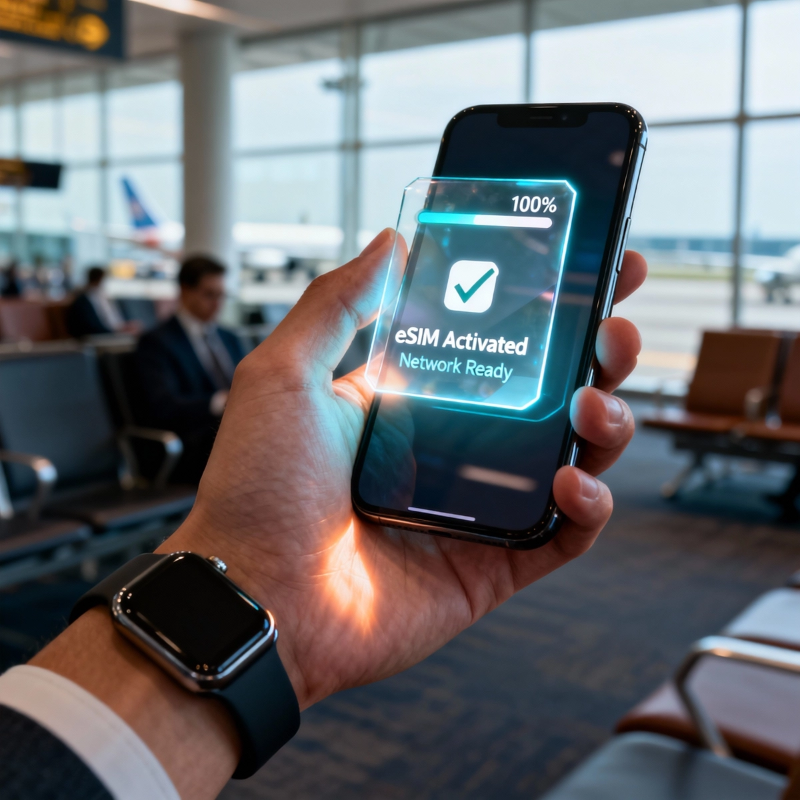
Yes. An eSIM/eUICC solution can be evaluated where remote profile operations are needed. It is project-specific and does not imply standard support on every soundbox or guaranteed global coverage.
Does eSIM guarantee global coverage or automatic network switching?
No. Coverage depends on the active profile, operator agreements, supported radio bands and local service availability. Remote profile management does not by itself guarantee automatic network selection, uninterrupted service or access to every operator.
Does the soundbox portal also manage eSIM profiles?
Remote eSIM profile management requires the appropriate eUICC provisioning service and integration. It should not be assumed to be included in the soundbox portal. BHZ can assess device operations and connectivity-management requirements together and define the service boundaries for the deployment.
Soundbox
What does a soundbox do?
It announces payment information received through your payment provider so you can hear notifications while serving customers. Amount displays, NFC interaction and receipt printing depend on the device and enabled service.
Can I use the soundbox without an internet connection?
Online payment notifications require network connectivity. Do not rely on an offline device to confirm a new payment. Verify transaction status through your merchant system.
Which payment apps can my customers use?
Your payment provider determines the apps, banks and currencies enabled for your merchant account. Check its supported-service list before displaying payment acceptance marks.
What if a payment is not announced?
Verify the transaction in your merchant payment system, then check device power, volume and connectivity. Contact your provider if it is recorded but not announced; do not request another payment solely because the soundbox is silent.
Who handles support and warranty requests?
Contact the supplier or payment provider with the device model, serial number, purchase details and a description of the issue. Warranty terms follow your supplied version and agreement; retain the warranty card and proof of purchase.
SIM and Soldered SIM
Can I install my own SIM card?
Check compatibility and service restrictions with your provider first. Turn off the device before handling a removable SIM, and do not attempt to remove a built-in SIM.
What should I do if the SIM does not connect?
Check activation, available data, local coverage and removable-SIM installation, then restart the device. Contact your provider if connection still fails.
How much data does a soundbox need?
Usage depends on notification volume, device communication, firmware updates and voice-content downloads. Pilot measurements help establish a suitable allowance. There is no single data allowance that applies to every deployment.
What happens if the SIM service expires or loses connectivity?
Cellular notifications may be interrupted. The service provider should check activation, data allowance and coverage. Supported Wi-Fi can provide an alternative connection where available, but automatic fallback should only be assumed when confirmed for the deployed firmware.
How do I renew the SIM plan or add data?
Contact your SIM or payment provider for renewal, top-up and pricing. An expired plan or exhausted allowance may interrupt cellular notifications; available Wi-Fi can be configured as an alternative using the correct manual.
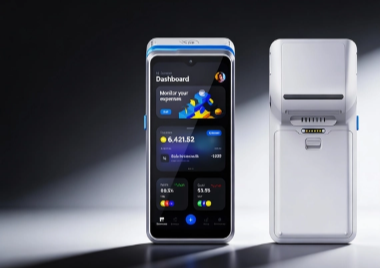
Payment notifications and receipt output in one countertop device. HD150 Print combines voice broadcast, QR payment notification and integrated printing for service-focused merchant environments.