




















As eSIM adoption expands across consumer devices, IoT equipment, smart mobility and connected terminals, reliable eSIM profile management has become an important part of connected device deployment. Operators, device makers and solution providers need platforms that can support standardized profile provisioning, lifecycle management, security requirements and integration with different device environments.
A reliable eSIM management platform should do more than support basic profile activation. It should help manage key lifecycle operations such as profile download, enablement, disablement, update and deletion according to the applicable GSMA architecture and project requirements. For customers planning large-scale eSIM deployment, the platform’s standards alignment, RSP capability, SM-DP+ support, security design and integration flexibility all deserve careful evaluation.As a provider of eSIM solutions, BHDC supports customers in building practical eSIM management solutions for suitable deployment scenarios.

Prioritize Standard Compliance and Full Lifecycle eSIM Management
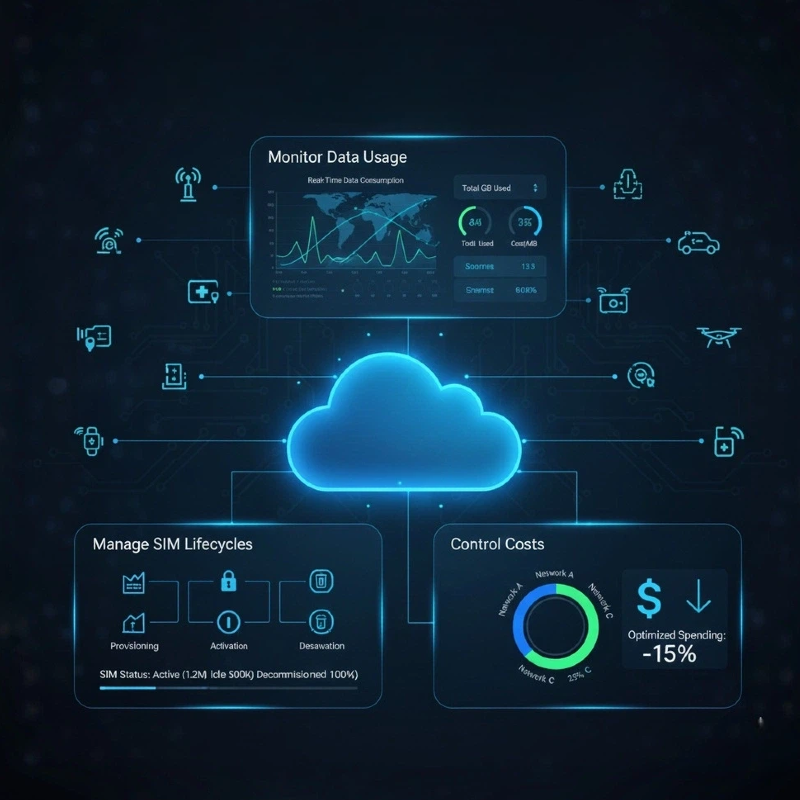
The core value of any high-performance eSIM management platform lies in standardized specifications and comprehensive lifecycle eSIM management capabilities. Many generic platforms only support basic profile activation, failing to meet long-term operational and regulatory needs of global businesses. Our BHDC eSIM management platform is designed with reference to GSMA SGP.22 specification, ensuring broad compatibility under applicable conditions with global eSIM devices and industry regulatory standards. This standardized foundation enables our clients to conduct compliant, cross-border eSIM management with less regional operational barriers. Through our integrated RSP platform, businesses gain full remote control to enable, disable, update, or delete eSIM profiles at any time. This all-in-one eSIM management model covers initial activation, routine maintenance, profile iteration, and final decommissioning, eliminating operational blind spots and ensuring stable, efficient control over millions of connected devices worldwide.
The first criterion for selecting an eSIM management platform is whether it is designed around recognized GSMA eSIM architectures. Different deployment scenarios may involve different specifications. Consumer eSIM applications commonly relate to GSMA SGP.22, while IoT eSIM deployments may involve GSMA SGP.32 and eIM-related architecture.
A professional platform should support standardized Remote SIM Provisioning workflows and work with key components such as eUICC and SM-DP+. For customers, this means profile download, activation, update, disablement and deletion can be managed through a more structured and traceable process.
BHDC’s RSP/SM-DP+/eSIM management platform capabilities are designed to support standardized eSIM profile provisioning and lifecycle management for different connected device scenarios. This helps customers build a more reliable foundation for eSIM deployment while reducing dependence on manual SIM handling.
Evaluate Full Profile Lifecycle Management
A reliable eSIM management platform should cover the major stages of profile lifecycle operation, not only the initial activation step. In real deployment, customers may need to download profiles, activate services, suspend or disable profiles, update profile status, delete expired profiles and manage device-side lifecycle records.
For operators, device makers and IoT solution providers, lifecycle management directly affects operational efficiency and long-term service continuity. A platform with clear profile status management, operation records and remote provisioning workflows can make large-scale eSIM deployment easier to manage.
When evaluating a platform, customers should check whether it supports the required lifecycle functions for their target scenario, device type and GSMA architecture. They should also confirm whether the platform can integrate with existing business systems, device management tools or customer-side operation platforms.
Check Security, Traceability and Compliance Support
Security is a core requirement for eSIM profile management. Remote profile operations involve sensitive subscription profiles, device identities and lifecycle records, so the platform should support secure profile handling, authenticated interactions, permission control and traceable operation logs.
A reliable eSIM management platform should also help customers meet relevant operational and compliance requirements within the project scope. However, standards alignment does not automatically guarantee universal compatibility or cross-region availability. Actual deployment still depends on device compatibility, operator profile resources, certification scope, local regulations and system integration conditions.
BHDC combines eSIM/eUICC products, RSP-related capabilities and project-based technical support to help customers build safer and more manageable eSIM profile lifecycle processes.
Focus on User Experience and Operational Scalability
In addition to standards and security, usability is also important. Technical and operational teams need clear workflows, manageable dashboards, API integration and role-based operation support. These capabilities can help reduce manual work during profile provisioning and daily lifecycle management.
For consumer eSIM scenarios, QR code activation or app-based activation may improve user experience when supported by the device, operator profile and RSP architecture. For IoT and connected-device scenarios, scalability is more closely related to batch operations, interface integration, device compatibility and stable profile lifecycle coordination.
A platform should therefore be evaluated not only by its feature list, but also by how well it fits the customer’s deployment model, device scale, operation process and long-term service requirements.
Make Future-Proof Choices for Long-Term eSIM Management Success
Selecting an eSIM management platform is not a one-time procurement but a long-term investment in digital connectivity infrastructure. Businesses need a solution that combines standard compliance, user-friendliness, scalability, and robust security to sustain long-term operational growth. Our BHDC eSIM management platform integrates all these core advantages, delivering professional, end-to-end eSIM management for global operators and enterprises. By choosing BHDC, businesses simplify complex connectivity operations, enhance end-user digital experiences, and build a stable, scalable foundation for global connected device expansion and service iteration.