





















As more connected products enter global markets, enterprises need flexible connectivity solutions that can support different deployment environments and long-term operation requirements. An eSIM solution is not only a replacement for a traditional SIM card but a complete system that combines secure hardware, digital management capabilities, and professional services. Through the BHDC eSIM solution, enterprises can build a connectivity framework that supports device activation, profile management, and continuous operation.

Key Components of a Complete eSIM Solution
A complete eSIM solution usually includes four core components: eUICC hardware, remote provisioning and management capabilities, software integration, and project services. These components work together to support device connectivity, profile management, application integration, and long-term deployment.
The first component is eUICC hardware. An eUICC is the foundation of an eSIM system because it provides secure storage and management capabilities for multiple network profiles. Unlike traditional SIM cards that require physical replacement when changing operators, eUICC technology allows devices to support more flexible connectivity configurations.
The second component is a remote provisioning and management platform. Since eSIM technology relies on digital profile management, enterprises need a platform that can remotely activate, configure, update, and manage connectivity profiles. This platform provides centralized control and helps companies handle device connectivity more efficiently.
Software integration is another important component. eSIM functionality needs to work with the device’s operating environment and connectivity applications. LPA and IPA SDKs can provide the software interfaces needed to integrate eSIM profile management and related functions into different devices and applications. This integration layer helps connect the eUICC and remote management capabilities with the product’s existing software architecture.
The fourth component is project service support. Different customers have different technical requirements, application scenarios, and deployment plans. Professional services help enterprises complete solution design, software and hardware integration, testing, and implementation according to their specific needs.
By combining these four elements, a complete eSIM solution provides enterprises with a more integrated approach to connectivity management. Rather than coordinating every technical layer independently, companies can work with a solution provider that brings hardware, platform capabilities, software integration, and project support into a more coordinated deployment process.
Full Lifecycle Management Through the BHDC eSIM Solution
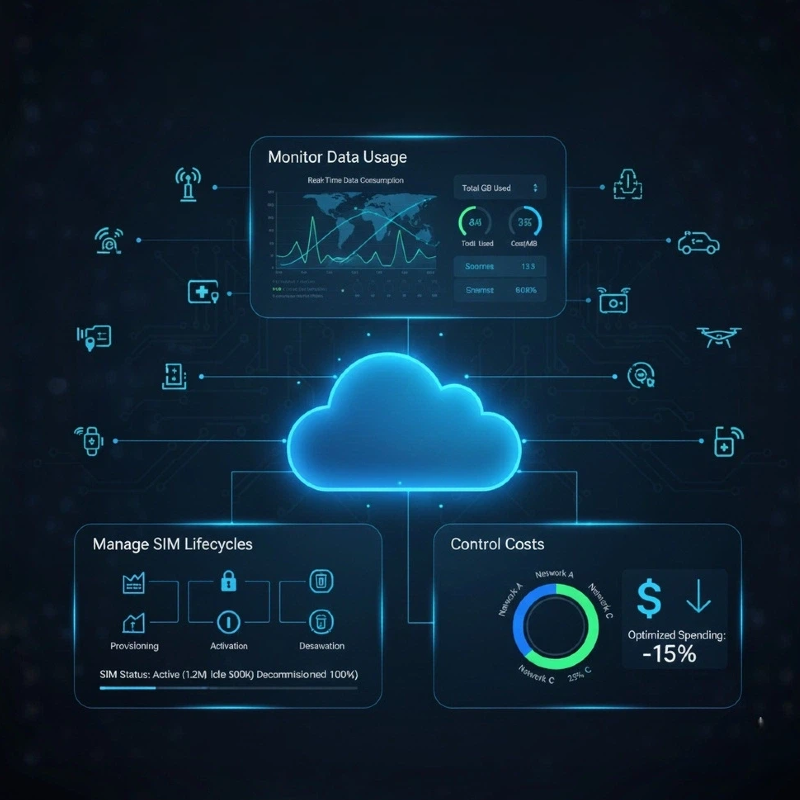
A complete eSIM solution should support the full lifecycle of connectivity management, from initial activation to long-term operation. The BHDC eSIM solution combines eUICC technology, remote management capabilities, and project support to help enterprises manage different stages of device connectivity.
During the activation stage, the eSIM platform enables devices to receive and configure network profiles according to deployment requirements. This allows enterprises to prepare connected devices for different markets and applications without relying on physical SIM replacement.
Profile switching is another important part of the lifecycle. When devices are deployed across different regions, connectivity requirements may change due to operator availability, market expansion, or service adjustments. Remote profile management allows enterprises to update connectivity configurations more efficiently.
Ongoing management is also essential after devices enter operation. Enterprises need to monitor connectivity conditions, manage profiles, and maintain stable communication throughout the device lifecycle. A centralized platform provides better control over connected products and simplifies daily management tasks.
For businesses operating large numbers of connected devices, eSIM solutions for businesses provide a more flexible approach by integrating connectivity management into a unified system. Through the solution, enterprises can reduce manual operations and improve the efficiency of long-term device management.
Different Deployment Requirements for Consumer Devices, IoT, and Automotive
Although eSIM technology provides a common technical foundation, different industries have different deployment requirements. The connectivity needs of consumer devices, IoT applications, and automotive systems vary depending on device usage, deployment scale, and operational lifecycle.
For consumer devices, convenience and flexible activation are important considerations. Products such as smart devices and connected electronics often need to support users in different regions. An eSIM solution helps manufacturers provide easier connectivity activation while supporting different network environments.
For IoT applications, large-scale management capability is usually a key requirement. IoT projects may involve thousands of devices deployed across different locations, including industrial equipment, sensors, and smart infrastructure. These applications require efficient profile management, remote operations, and stable connectivity throughout long service periods.
For automotive applications, reliability and lifecycle management are especially important. Vehicles typically remain in operation for many years, and connectivity requirements may change during this period. Automotive manufacturers need eSIM solutions that support flexible profile management while maintaining stable communication performance.
Through the BHDC eSIM solution supports different industries with adaptable connectivity capabilities. By combining secure eUICC hardware, remote management functions, and project services, we help customers address the specific requirements of consumer devices, IoT deployments, and automotive applications.
Simplifying Implementation Through a One-Stop eSIM Solution
For enterprises, implementing an eSIM project can become complicated when multiple suppliers are involved. Coordinating separate hardware providers, platform developers, and service partners may increase communication requirements and create additional challenges during integration.
A one-stop eSIM solution helps reduce this complexity by bringing essential components and technical capabilities into a more coordinated system. Enterprises can work with solution providers that support eUICC hardware, remote management platforms, software integration, and project services, while still coordinating with other partners where the project requires. This approach can reduce communication and integration complexity across different technical layers.
This approach also helps reduce difficulties during implementation. When hardware, software, and services are designed to work together, enterprises can achieve smoother integration and reduce potential coordination issues between different suppliers.
For businesses planning large-scale connectivity projects, selecting a complete solution provider is important. A suitable partner should not only provide eSIM technology but also support deployment activities from planning to long-term operation.
The BHDC eSIM solution provides integrated capabilities that help enterprises simplify connectivity management. By combining hardware, platform functions, and project services, the BHDC eSIM solution supports the development of reliability-focused and scalable connected products.
A complete eSIM solution allows enterprises to move beyond individual components and create a more efficient connectivity ecosystem. Through a one-stop approach, companies can reduce multi-vendor coordination and improve the overall efficiency of eSIM project implementation.