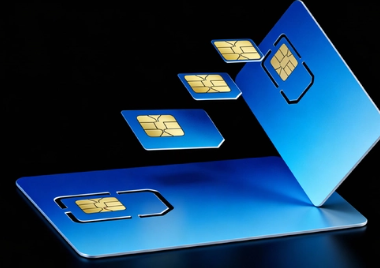










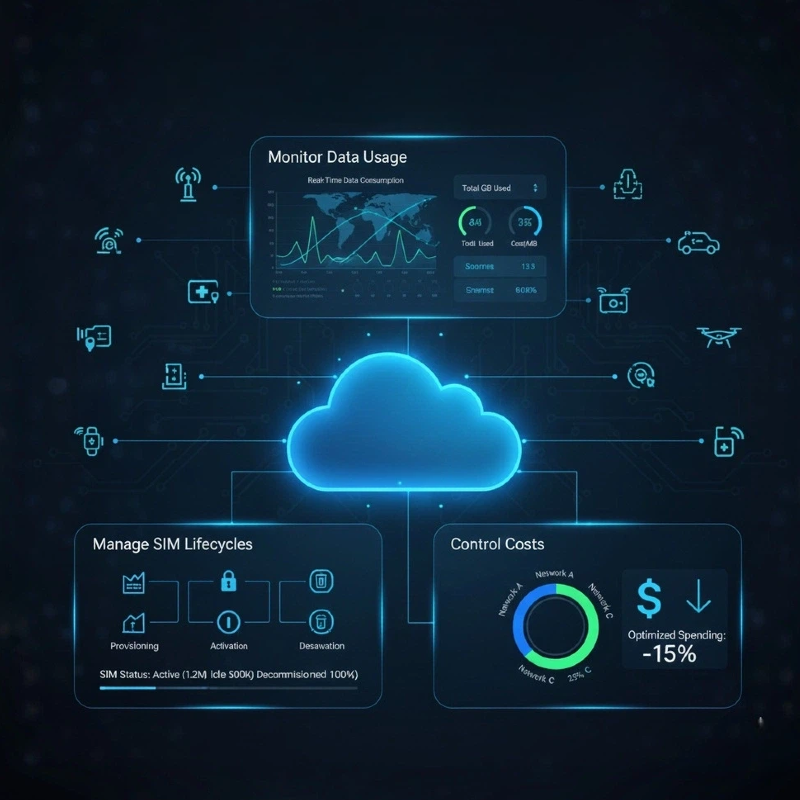







IoT devices increasingly require flexible and reliable connectivity management to support stable data exchange and remote operations. As the number of connected devices increases, traditional SIM management methods may become difficult to handle across different locations and networks. eSIM technology provides a more flexible approach by allowing operators and enterprises to manage connectivity profiles remotely.
In the GSMA SGP.32 IoT architecture, eIM plays an important role in coordinating remote profile management tasks. For enterprises deploying large numbers of connected devices, eSIM IoT manager solutions help organize profile operations and support long-term device connectivity management.

The Role of eIM in SGP.32 IoT Architecture
In the SGP.32 architecture, eIM refers to the eSIM IoT remote manager. It is designed for managing eSIM profiles used in IoT devices. The main function of eIM is to coordinate and manage profile-related tasks between devices, service platforms, and network systems.
Unlike traditional SIM replacement methods, eIM allows enterprises to manage connectivity profiles remotely. It can receive management requests and organize profile operations according to device requirements, helping IoT deployments adapt to changing connection environments.
For large-scale IoT projects, an eSIM IoT manager provides a structured method to handle device connectivity activities. It supports communication between different components in the eSIM ecosystem and helps simplify remote management processes.
As IoT deployments continue to expand, enterprises need a more organized method to manage connectivity profiles across different devices and regions. eIM provides a centralized approach for handling profile-related tasks, helping different systems communicate during the management process. This makes remote eSIM operations easier to coordinate in complex IoT environments.
How eIM Works with IPA and SM-DP+ in SGP.32
Within the GSMA SGP.32 specification, the eIM operates in synergy with the IoT Profile Assistant (IPA) on the eUICC or device side and the SM-DP+ (Subscription Manager Data Preparation+) on the server side to support over-the-air (OTA) profile provisioning. Each component has a different role in the process. The eIM focuses on task coordination, while IPA and SM-DP+ support device-side execution and profile delivery.
The eIM sends management instructions to the IPA installed on IoT devices. After receiving the request, the IPA communicates with the eSIM and performs the required operations on the device side. This process allows remote commands to reach the target device without physical SIM replacement.
At the same time, eIM works with SM-DP+ to manage profile preparation and delivery. SM-DP+ provides the required eSIM profile, while eIM coordinates the related management tasks. Through cooperation between these components, enterprises can complete remote profile configuration for connected devices.
How eSIM Profile Remote Management Works Step by Step
The typical remote eSIM profile management process starts when an enterprise or operator creates a management request. The request is sent to eIM, which analyzes the required operation and prepares the corresponding management instruction.
The next step is command delivery. The eIM sends the instruction to IPA on the target IoT device. IPA receives the command and communicates with the eSIM environment to prepare the profile operation.
After the device is ready, the required profile is provided through SM-DP+. The profile data is downloaded to the device and installed into the eSIM according to the management instruction.
After installation, the profile can be activated for network access. If connection requirements change, the eIM can coordinate profile switching based on new instructions. This process supports remote management throughout the device lifecycle.
Application Scenarios of BHDC eSIM IoT Remote Manager Solution
Large-scale IoT deployment requires efficient ways to manage thousands of connected devices across different locations. Smart meters, connected vehicles, industrial terminals, and other IoT equipment often need remote connectivity management during long-term operation.
BHDC provides eSIM management solutions designed for business applications. Our eSIM IoT manager solution supports profile configuration, remote management tasks, and lifecycle operations for connected devices.
For operators, IoT companies, and OEM customers, managing a large number of devices requires centralized control. Our solution helps customers organize batch connection deployment and handle profile-related operations more efficiently during different stages of device usage.
With the support of the eSIM IoT manager, enterprises can manage eSIM connectivity requirements based on different application scenarios. BHDC supports global enterprise customers across telecommunications, connected automotive, smart utilities, and industrial IoT sectors.
In practical deployments, remote management is important because IoT devices may operate in different locations and require changes during their service lifecycle. Through centralized management, enterprises can reduce manual operations and improve the efficiency of device connectivity maintenance.
Building Flexible IoT Connectivity with eIM Technology
eIM is an important component in the GSMA SGP.32 IoT architecture because it coordinates remote eSIM profile management between different systems. In coordination with IPA and SM-DP+, it enables profile download, installation, activation, and switching processes.
For enterprises managing large IoT networks, selecting suitable remote management technology is essential to long-term connectivity planning. BHDC continues to support business customers with eSIM-related solutions designed for different application needs.
With device density rising across industrial networks, eSIM IoT manager platforms will continue to support more efficient device lifecycle management. By combining remote profile control and IoT connectivity technologies, companies can build more flexible communication networks for future applications.