





















As cellular IoT deployments expand across smart metering, asset tracking, logistics, industrial monitoring and other connected scenarios, customers need clearer visibility into SIM/eSIM resources, data usage, connection status and connectivity costs. A cellular IoT connectivity management platform is designed to help teams manage connectivity-related operations in a centralized way, rather than directly control device hardware or application data.
For projects involving large numbers of IoT SIMs or IoT eSIMs, the right platform should support SIM lifecycle management, traffic monitoring, connection status visibility, package management, billing analysis, alerts and system integration. BHDC’s CMP platform focuses on traffic and connectivity management, helping customers improve operational efficiency and gain better control over cellular IoT connectivity resources.

Centralized Management for SIM/eSIM Connectivity Resources
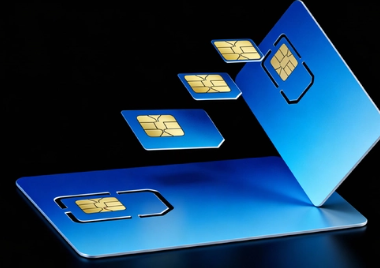
A reliable cellular IoT connectivity management platform should first provide centralized visibility and control over SIM/eSIM resources. When customers manage large numbers of IoT cards across different projects, regions or service scenarios, manual tracking can quickly become inefficient and error-prone.
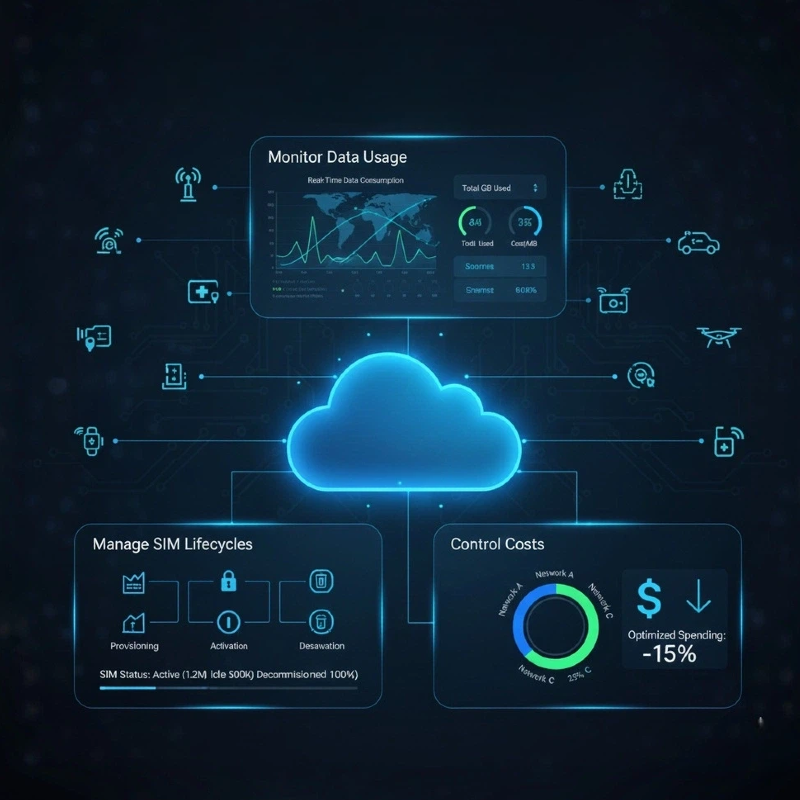
BHDC’s CMP platform supports centralized management of IoT SIM/eSIM resources, helping customers view card information, manage activation status, monitor usage and organize connectivity resources more efficiently. Instead of treating each SIM or eSIM as an isolated resource, customers can manage connectivity operations through a more structured platform workflow.
This is especially useful for IoT projects that involve batch deployment, long-term operation and distributed terminal locations. With clearer resource visibility, teams can reduce repetitive manual work and respond more efficiently to connectivity-related operational needs.
Traffic Monitoring, Package Management and Billing Visibility
Traffic and cost control are core reasons why customers need a CMP platform. In cellular IoT projects, data consumption may vary by device type, application scenario, region and service period. Without clear traffic visibility, customers may find it difficult to identify abnormal usage, evaluate package suitability or control connectivity costs.
A practical CMP platform should support traffic usage monitoring, package management, billing visibility and rule-based alerts. Customers should be able to view data consumption by SIM/eSIM resource, project or account, and use these insights to adjust connectivity strategies according to actual business needs.
BHDC’s CMP platform is designed to help customers manage traffic-related operations more clearly, including usage visibility, package allocation, consumption analysis and abnormal traffic reminders. These capabilities help customers reduce manual reconciliation work and improve the transparency of cellular IoT connectivity operations.
Connection Status Visibility Without Overstating Device Control
Another important criterion is connection status visibility. A CMP platform can help customers check whether SIM/eSIM resources are activated, suspended, online, offline or generating traffic under supported network conditions. This information is valuable for daily operations because it helps teams understand the connectivity status of deployed IoT resources.
However, connection status should not be confused with full device management. A CMP platform usually does not directly monitor device hardware status, sensor readings, battery level, firmware health or application-layer performance. These functions typically belong to device management platforms or customer-side IoT application systems.
For this reason, customers should choose a cellular IoT connectivity management platform with a clear understanding of its role: it manages connectivity resources, traffic usage and connection-related information, while working alongside other systems when deeper device-level monitoring is required.
Turning IoT Connectivity Into Sustainable Strategic Advantages
Excellent IoT connectivity management does not merely maintain basic device connections—it transforms passive network maintenance into active strategic business value. Ordinary connectivity tools only fulfill basic linking functions, while a premium IoT connectivity management platform optimizes every link of IoT operation, helping enterprises gain competitive edges in digital transformation.
BHDC’s dedicated IoT connectivity management platform turns ordinary cellular connectivity into a long-term strategic advantage for enterprises. Our stable, flexible, and easy-to-deploy system ensures full-scenario connection stability and faster response efficiency for industrial, commercial, and public service IoT projects. By combining elastic scalability, simplified operations, and intelligent management capabilities, our IoT connectivity management helps enterprises reduce comprehensive operational costs, improve deployment efficiency, and support sustainable business iteration and growth in the evolving IoT landscape.