






















Deploying IoT devices requires careful planning before products enter the market. Connectivity decisions made during the early stage can directly affect device performance, maintenance efficiency, and long-term operating costs. Selecting a suitable IoT SIM card involves more than choosing a physical component; it also requires consideration of network compatibility, device integration, and future management capabilities. BHDC IoT SIM solutions support enterprises in building reliability-focused connectivity strategies for different IoT applications.

Confirm Deployment Region and Network Requirements
Before selecting an IoT SIM solution, enterprises should first confirm the target deployment country or region, available mobile network operators, and required network standards. This step helps prevent connectivity compatibility issues after devices are already deployed.
IoT devices are often distributed across different markets, and network conditions can vary significantly between regions. A SIM solution that supports one operator or network environment may not meet the requirements of another location. Therefore, businesses need to understand where devices will operate and which networks are available in those areas.
Mobile network operator selection is also an important part of deployment planning. Enterprises may choose a specific operator based on coverage, service availability, or business agreements. For projects involving international deployment, companies may need a connectivity solution that supports multiple operators or regions.
Network requirements should also match the application scenario. For example, smart meters may require stable long-term communication, while mobile equipment may need connectivity solutions that can support changing locations. Industrial devices may have different communication requirements compared with consumer IoT products.
By confirming regional and network requirements at the beginning, enterprises can select a more suitable IoT SIM card solution and reduce the risk of connectivity problems during large-scale deployment.
Select the Right SIM Form Factor and Connectivity Solution
After confirming network requirements, enterprises need to select the appropriate SIM type based on device design, operating environment, and connectivity management needs. Different devices may require different SIM forms to achieve stable operation.
A pluggable SIM is a common option for IoT devices where physical replacement is possible. This type of SIM can be installed and replaced relatively easily, making it suitable for applications where devices are accessible and maintenance operations are manageable.
For devices with limited internal space or applications that require a higher level of integration, an embedded SIM such as MFF2 may be more suitable. Embedded SIMs are installed directly onto the device circuit board, helping reduce space requirements while supporting more stable installation in certain environments.
For enterprises that require flexible connectivity management, eSIM/eUICC solutions provide additional options. An eSIM with eUICC technology allows remote provisioning and profile management, reducing dependence on physical SIM replacement when connectivity requirements change.
The choice between different IoT SIM cards should consider several factors. Device size limitations may influence whether a pluggable SIM or embedded solution is appropriate. Operating environments may determine whether a more durable option is needed. Connectivity management requirements may influence whether remote provisioning capabilities are necessary.
BHDC IoT SIM solutions provide connectivity options that support different device structures and deployment requirements. Selecting the correct SIM form factor at the beginning helps enterprises avoid integration challenges later.
Evaluate Long-Term IoT Management Capabilities
IoT deployment does not end after devices successfully connect to a network. Enterprises should also consider how they will manage devices throughout their operational lifecycle.
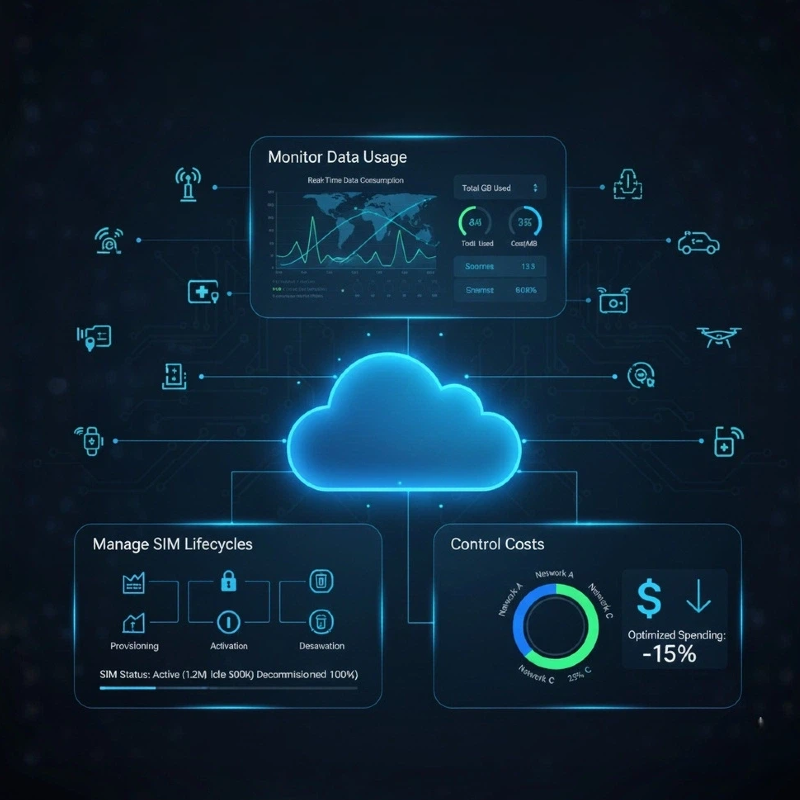
For projects involving large numbers of connected devices, manual management can become inefficient. Businesses may need to monitor connectivity status, manage network profiles, and adjust services after devices are deployed in different locations.
Remote management capabilities become especially important when enterprises use eSIM-based connectivity solutions. Through BHDC remote eSIM management capabilities, businesses can manage connectivity profiles without requiring physical access to each device.
Batch device management is another important capability for large-scale IoT projects. Instead of managing every device separately, enterprises can perform centralized operations to improve efficiency and reduce maintenance workload.
These capabilities are valuable for applications such as industrial equipment, smart infrastructure, transportation systems, and connected devices. Many IoT products are designed to operate for several years, so businesses need solutions that support both initial deployment and long-term operation.
When evaluating an IoT SIM card solution, enterprises should consider not only current connectivity needs but also future management requirements. A solution with appropriate operational capabilities can help reduce complexity as the number of connected devices increases.
Verify Supplier Capability Before Large-Scale Procurement
Before proceeding with large-scale procurement, enterprises should verify supplier capabilities through sample testing, production evaluation, and technical communication.
Sample testing allows businesses to confirm whether the SIM solution meets device requirements. During this stage, companies can evaluate connectivity performance, hardware compatibility, and suitability for the intended application environment.
Supply capacity is another important factor. Large IoT projects often require continuous product availability and consistent quality. Enterprises should confirm whether the supplier can support expected order volumes and maintain stable production capabilities.
Lead times should also be considered during procurement planning. Understanding production schedules and delivery arrangements helps businesses coordinate device manufacturing and market deployment more effectively.
Technical support is equally important for long-term cooperation. During deployment and operation, enterprises may require assistance with integration, configuration, or troubleshooting. A supplier with strong technical support capabilities can help customers address challenges more efficiently.
BHDC IoT SIM solutions support customers throughout the deployment process, from product selection and testing to large-scale delivery and technical assistance. By evaluating network requirements, selecting the appropriate SIM type, considering long-term management, and verifying supplier capabilities, enterprises can establish a solid foundation for IoT deployment.